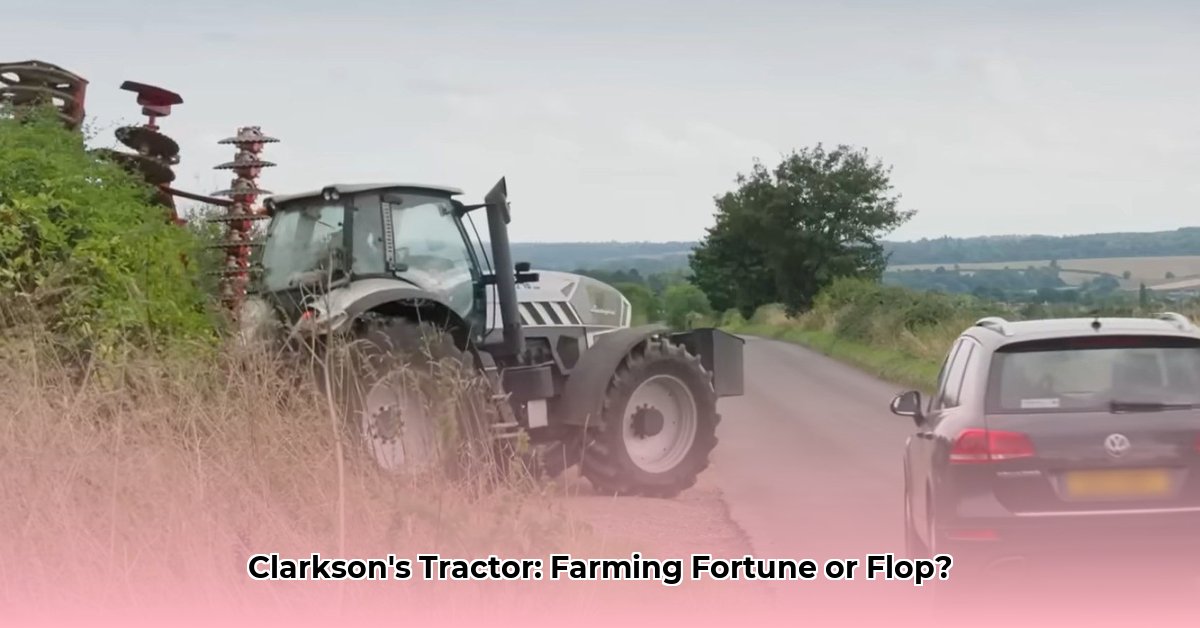
Jeremy Clarkson's Lamborghini tractor: a £40,000 gamble that taught him (and us) a valuable lesson about farm machinery. This case study examines the real cost of Clarkson's impulsive purchase, revealing the hidden expenses that turned his farming dreams into a costly lesson. We'll analyze the financial implications, explore the operational challenges, and offer actionable insights to help you avoid becoming the next farming disaster story. For more details, see this detailed analysis.
The Grand Purchase: A £40,000 Gamble (and a Lesson in Reality)
Clarkson, known for his high-octane adventures in the automotive world, decided to inject some Italian flair into his Diddly Squat Farm with a Lamborghini R8 270 DCR tractor. The £40,000 price tag was, to put it mildly, eye-watering. But his initial motivation likely transcended mere practicality; it was a bold statement, a playful challenge to conventional farming wisdom. He probably envisioned himself effortlessly gliding across his fields, the Lamborghini badge gleaming under the sun. The reality, however, proved far less glamorous.
The Tractor That Broke the Barn: More Than Just a Price Tag
This wasn't your average John Deere. The Lamborghini was a behemoth. Think of a small car—that's roughly its size. This agricultural monster boasts impressive specs— a substantial 775 lb-ft of torque—but its sheer size became a major, and immediately apparent, problem. Clarkson’s existing infrastructure simply wasn't designed for such a gargantuan machine. His barn proved too small, his driveway far too narrow. Suddenly, that initial £40,000 investment paled in comparison to the costs of necessary modifications. It was a classic case of neglecting the bigger picture. The financial implications quickly spiraled out of control. Was this a wise investment? That's the question this case study aims to answer.
Unexpected Costs: Adding Up the Price of Prestige
The initial £40,000 was just the tip of the iceberg. Adapting the farm to accommodate the Lamborghini's dimensions resulted in significant additional expenses. We're talking about substantial barn expansions, driveway widening projects costing tens of thousands of pounds, and specialized labor to operate and maintain the sophisticated machine, further inflating the costs. The initial investment was dwarfed by the unforeseen expenses that quickly piled up. One could easily argue that a more practical approach would have saved a significant amount of money.
Operational Nightmare: A 48-Gear Headache of Epic Proportions
Operating the Lamborghini proved to be far more challenging than Clarkson anticipated. The tractor’s bewilderingly complex controls, boasting a seemingly endless 48 gears and an overwhelming number of buttons, presented a steep learning curve. For someone more accustomed to the straightforward speed and simplicity of powerful cars, this was a level of frustration only matched by the mounting costs. This episode highlights a crucial point often overlooked: specialized agricultural machinery demands a unique set of skills and knowledge that differ significantly from operating a car or other types of machinery.
The Cost-Benefit Conundrum: Weighing Up the Pros and Cons
A cost-benefit analysis clearly demonstrates that Clarkson could have achieved comparable productivity with a more conventional, smaller tractor—one better suited to his existing infrastructure and skill set. The cumulative cost, factoring in modifications and ongoing maintenance, significantly exceeded that of a more practical alternative, highlighting a crucial lesson in fiscal responsibility. The prestige and excitement surrounding the Lamborghini overshadowed the reality of practical and budgetary concerns. A valuable lesson indeed.
Lessons Learned: Beyond the Lamborghini's Price Tag
Clarkson's experience serves as a cautionary tale for anyone considering a major investment in agricultural machinery. It's not just about the sticker price; it's about the total cost of ownership. While a Lamborghini tractor might seem appealing, overlooking issues like infrastructure requirements, operational complexities, and maintenance costs can lead to financial ruin. Thorough research, careful planning, and a realistic assessment of one's skills are essential before investing in specialized equipment.
Summary Table: Clarkson's Lamborghini Tractor - A Cost Breakdown (Estimates)
| Item | Estimated Cost (£) | Notes |
|---|---|---|
| Initial Purchase Price | 40,000 | The initial investment. |
| Barn Modifications | 10,000 - 20,000 | Significant expansion to house the oversized tractor. |
| Driveway Widening | 5,000 - 10,000 | Essential for safe maneuvering of the tractor. |
| Specialized Labor | 5,000 - 10,000 | Costs of hiring experts to operate and maintain the complex machine. |
| Maintenance & Repairs | Ongoing, unknown | An often-underestimated, long-term expense. |
| Total Estimated Cost | 60,000 - 80,000+ | Significantly surpassing the initial purchase price. |
This Lamborghini tractor adventure proved that choosing simplicity and practicality is often the most cost-effective route, particularly in the world of farming. It's a pricey lesson learned the hard way.
How to Avoid a Clarkson-Level Farming Disaster: A Step-by-Step Guide
Jeremy Clarkson's Lamborghini tractor debacle provides a compelling case study in poor agricultural investment. To avoid a similar fate, follow these steps:
Define Your Needs: Identify the specific tasks the tractor needs to perform. Don't overestimate your capabilities. A smaller, more manageable tractor might be far more efficient.
Assess Your Infrastructure: Ensure your existing infrastructure is suitable for the chosen tractor. Will it fit in your barn? Can it navigate your fields and driveways?
Evaluate Your Skills: Be realistic about your capabilities and available labor. Can you operate and maintain the tractor yourself, or will you require specialized help?
Budget Accordingly: Calculate the total cost of ownership, not just the initial purchase price. Factor in maintenance, repairs, fuel, insurance, potential infrastructure modifications, and labor costs.
Research Alternatives: Compare different tractor models and brands, focusing on their cost-effectiveness and suitability for your needs.
Seek Expert Advice: Consult with agricultural experts or experienced farmers to get personalized advice.
Make an Informed Decision: Weigh up the pros and cons carefully and choose the equipment that best meets your needs and budget without compromising on practicality.
By following these steps, you can avoid the costly mistakes made by Jeremy Clarkson and ensure your agricultural investments are both productive and financially sound. Remember, sometimes, the most expensive option isn't the best option.